2018
Since 2018, the company uses only certified CO2-free electricity (Turku Energia, Ekotakuu Sähkö)
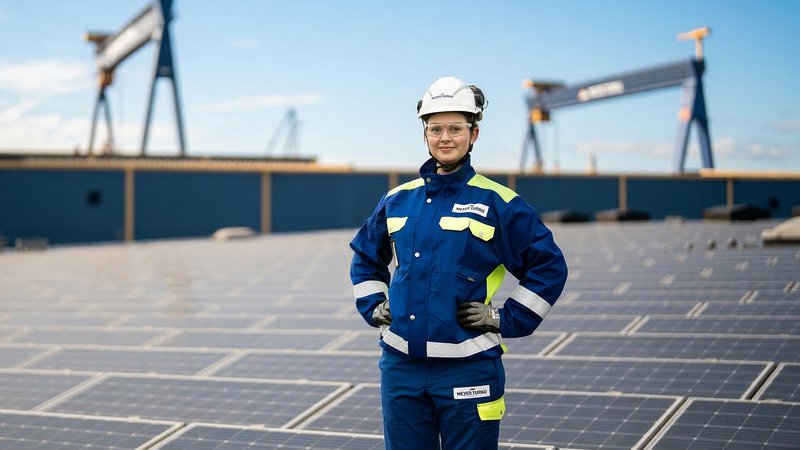
Meyer Turku’s environmental sustainability efforts are focused on reducing the shipyard’s direct carbon dioxide emissions and designing and building more sustainable cruise ships. We also work continuously to reduce and manage the shipyard’s other environmental impacts.
Our goal is to reach net zero at the shipyard by 2030 for Scope 1 and 2 emissions. We have already implemented several successful reduction measures over the years. For instance, no Scope 2 emissions have been generated by the shipyard’s operations since 2023.
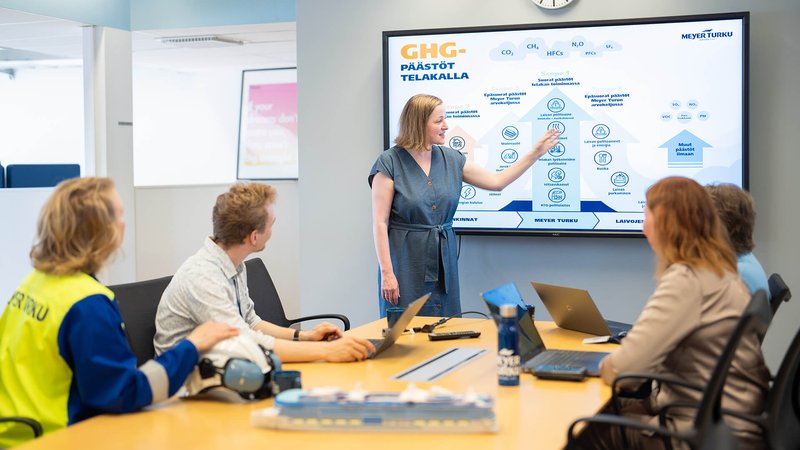
Our shipyard’s own direct emissions are generated from welding gases, ship fuels, machinery, heaters and our RTO facility.
For heaters and machinery, we have transitioned to renewable HVO fuel, which has enabled us to reach zero emissions for these functions. To reduce welding gases, we have conducted research in cooperation with universities, for example.
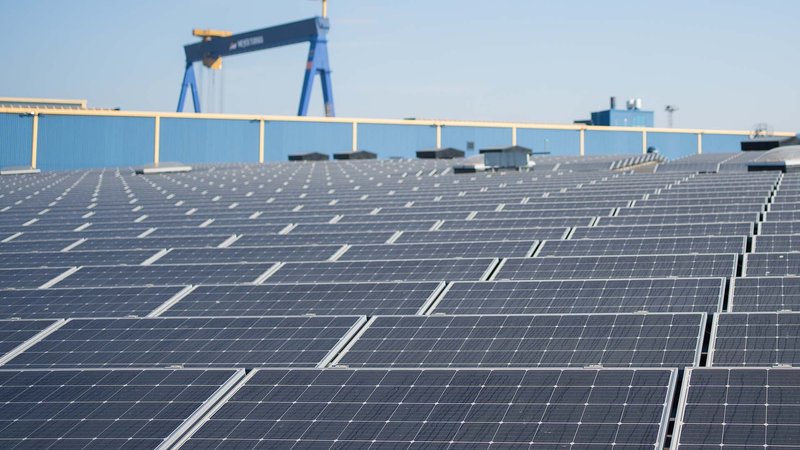
Shipyard operations are highly energy-intensive, which is why efficient energy solutions are a key component of our sustainability work. We only use renewable electricity covered by Guarantees of Origin and district heating produced locally with heat pump technology. The use of HVO across various functions has significantly reduced fossil emissions, and our own solar power plant supports more efficient energy production. In 2025, we modernised outdoor lighting in the entire shipyard area with LED technology.
In 2023, we joined the Energy Efficiency Agreement for Industries. We set a goal to reduce energy consumption by 7.5% by the end of 2025. As we achieved that goal in early 2025, our total reductions amounted to 142% of the original target by the end of the year. We have also committed to the next agreement period for 2026–2035. Our overall target for the period is a 13.5% reduction in our energy consumption.
The shipyard’s water discharges consist of wastewater and stormwater. The shipyard’s wastewater is discharged into the sewer system, and stormwater is directed into the ditches surrounding the shipyard and into the sea.
The quality of the stormwater is monitored in accordance with our environmental permit. The environmental load on the marine area caused by stormwater has been minimal. In 2025, the quality of the stormwater and its environmental strain was studied as part of our biodiversity project. This provided the foundation for an action plan, in which the construction of a meltwater treatment system for the snow disposal area was identified as the top priority and completed in late 2025.
In addition to the habitats characteristic to the region, the shipyard area and its surroundings host many other habitat types, such as extremely endangered small rocky meadows and the valuable Raisionlahti waterfowl habitat.
Conducted in 2025, our biodiversity project assessed the state of local biodiversity and the key impacts of the shipyard’s operations upon it. During the project, several nature management measures were carried out and information gaps related to biodiversity were identified.
The shipyard generates many types of waste, primarily consisting of metal waste, miscellaneous shipbuilding waste and energy and wood waste.
Our waste management is anchored in the waste hierarchy, as defined in the Waste Act. Our primary goal is to reduce the amount of waste generated and its adverse effects. Our secondary goal is to divert waste towards re-use and recycling. If neither is an option, we utilise the waste in other ways. Final disposal is only considered as a last resort.