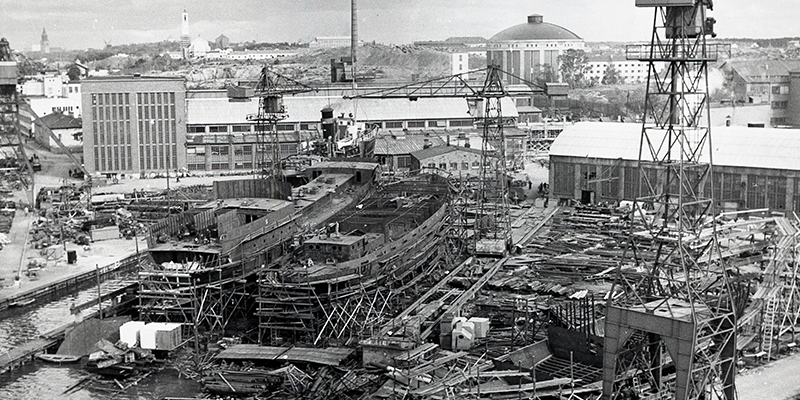
Burgeoning shipyard industry
Two new shipyards were established in Finland in the second half of the 19th century: the Hietalahti shipyard in Helsinki (1865) and the Vulcan shipyard in Turku (1898). The latter soon merged with the Ab Crichton shipyard from across the Aura river. In 1936, Wärtsilä acquired both the Hietalahti shipyard and Ab Crichton-Vulcan.
The shipbuilding industry grew rapidly in post-war Finland. While the first vessels were simple barges and brigantines, development shifted towards research and passenger vessels over the coming years.
The name Crichton-Vulcan was used until 1965 when the shipyard became known as the Wärtsilä Turku Shipyard. By 1971, Wärtsilä Turku Shipyard was the largest employer in Finland, with a total workforce of 5,300.
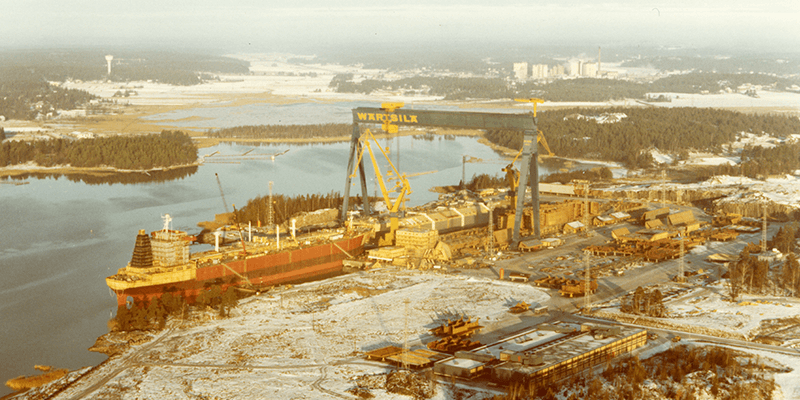
A period of mergers
The production of war reparations consumed a significant portion of existing shipyard capacity, and the onset of serial production in shipbuilding placed entirely new demands on shipyards. To respond to the new landscape, leading Finnish shipowners founded Oy Laivateollisuus Ab shipyard in Pansio, Turku, in 1945. Valmet assumed ownership of this shipyard in 1973.
Coming into the 1970s, the Wärtsilä shipyard at the Aurajoki riverfront was becoming outdated and the residential development around the shipyard was constraining further growth. In 1976, Wärtsilä inaugurated its new state-of-the art shipyard in the Perno area. Operations at the Aura riverfront continued until the 1980s.
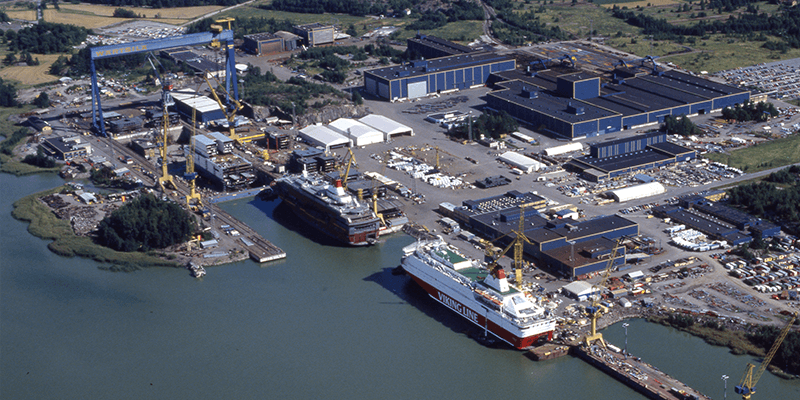
In 1986, Wärtsilä and Valmet decided to merge their ship-building operations, forming a joint venture at the Perno shipyard. In 1989, this company continued operations under a new name, Masa-Yards. Since 1991, the Turku and Helsinki shipyard was co-owned by Norwegian Kvaerner ASA. Mergers continued until 2002 when Aker and Kvaerner joined forces to become Aker Kvaerner Yards.
Under Korean ownership
In 2004, Aker brought the Finnish shipyards under a single roof, and the company took the new name Aker Finnyards. In August 2008, Korean STX Shipbuilding bought Aker Yards and the company was renamed STX Europe. Its Finnish operations were run under the name STX Finland.
Entering an era of family ownership
In September 2014, a sale was announced in which the German Meyer family and the Finnish state acquired ownership of the STX Turku shipyard. The following year, the Turku shipyard was fully transferred under Meyer’s ownership, and it became a part of the Meyer Group. Jan Meyer first served as the shipyard’s CEO, followed by Tim Meyer.
Meyer Turku Oy became an independent company at the end of 2024, remaining fully under the Meyer family ownership. At the same time, the shipyards owned by Meyer in Germany were largely transferred to the German state.
Turku shipyard today
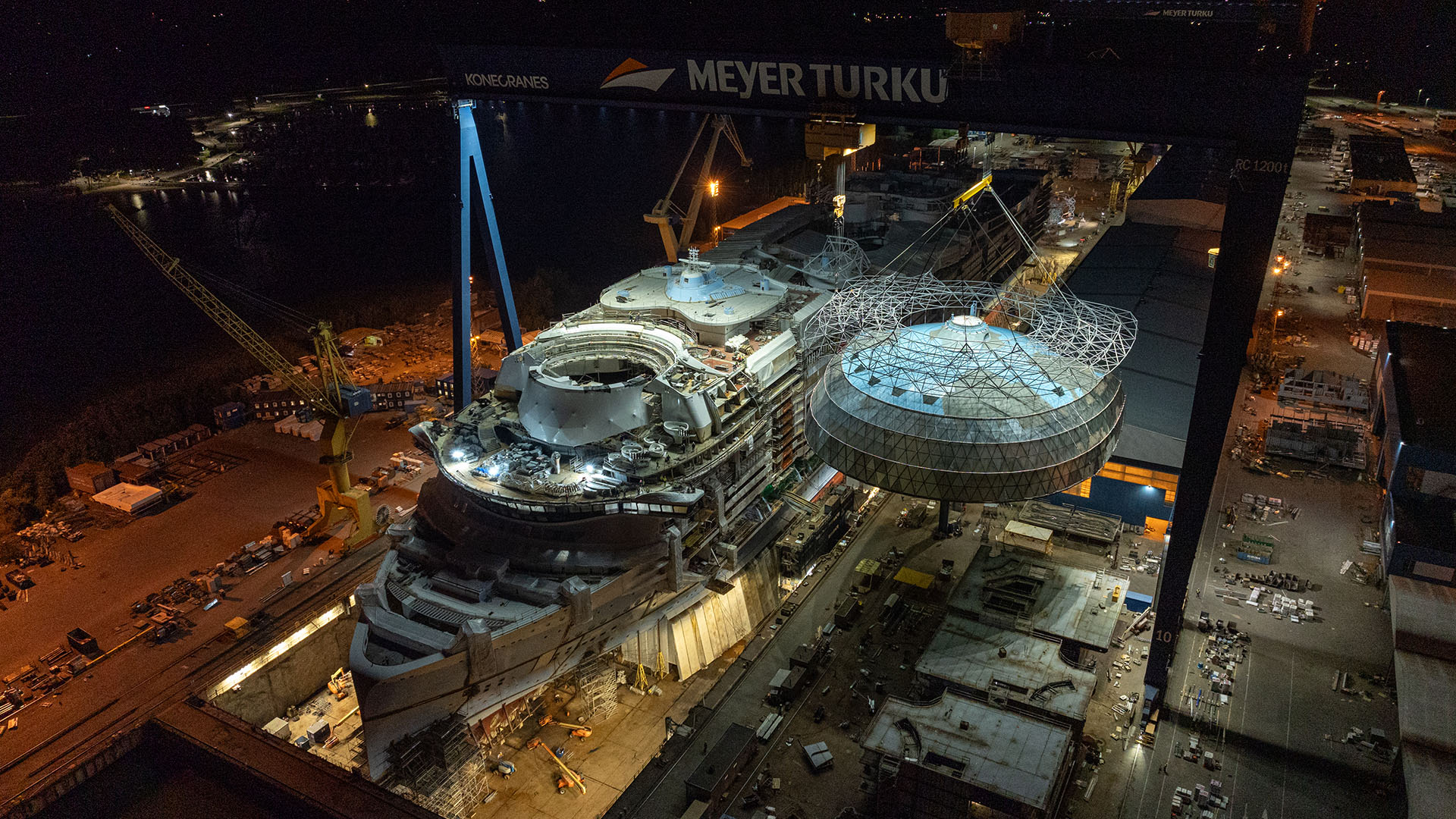
The world’s most advanced cruise ships – the Icon class – are built at the Meyer Turku shipyard. The first and second Icon class ships, Icon of the Seas and Star of the Seas have been delivered as of 2025. The third and fourth Icon class ships, Legend and Hero of the Seas are currently under construction at the Meyer Turku shipyard, as well as the as-of-yet unnamed fifth Icon class ship.
Additionally, two offshore patrol vessels for the Finnish Border Guard are under construction with Meyer Turku in charge of project management.
Meyer Turku’s share of the global cruise shipbuilding market is approximately 17%. The company’s order book is confirmed until 2028, and building rights have been secured for a historically long period: all the way to 2036.